Newsletters




The ceasefire has now taken effect. A two-week pause has been agreed, a framework has been exchanged, and negotiations are set to begin under Pakistan's mediation.
On paper, this is how wars end. In practice, it depends entirely on whose paper you are reading.
Washington and Tehran have offered incompatible interpretations of the same arrangement. For Washington, the ceasefire represents coercive success, a demonstration that sustained military pressure produced concessions.
For Tehran, it represents a conditional suspension of hostilities, one that preserves the structural integrity of the conflict and commits to nothing beyond the immediate pause. This is not a matter of competing spins. It is a question of who actually got what they wanted.
That void is not a product of the ending. It was the logic of the conflict from the beginning. Throughout the war, Trump did not describe events as they occurred.
He described them as he needed them to have occurred: the destruction of Iran's nuclear capacity, the collapse of its leadership, and a new political order already taking shape. None of these statements followed the ground. They preceded it. Reality never caught up.
Now, the war has paused. However, Iran enters that pause intact, operational, and central to the terms of de-escalation itself. Trump is not describing the war as it ended. He is continuing to describe it as he intended it to end.
Throughout the war, a claim was made, Iran rejected it, and Washington insisted on its validity regardless. Deadlines came and went without result. The difficulty Trump faces in Iran is that his claims are unusually concrete, and the two-week pause does not resolve them.
A ceasefire has been announced, but what it represents remains an open question: a genuine turning point or simply the latest claim waiting to be tested against reality. That kind of question does not stay open indefinitely. It eventually collides with observable facts.
The final phase of the war made that collision feel imminent. Trump warned that "a whole civilization will die tonight" if Iran failed to meet his deadline, framing the moment as one of the most consequential in modern history.
The statement was widely condemned and interpreted as an implicit threat of catastrophic, even nuclear, escalation. In language, at least, the war had crossed into existential terms.
Within hours, that position shifted. Trump announced that planned strikes had been suspended for two weeks and described Iran's proposal as a workable basis for a broader agreement, claiming that most points of contention had already been resolved.
In his telling, the ceasefire was not a mutual pause but a capitulation under pressure. Iran, faced with that prospect, had sought time to avoid collapse.
Tehran presented the same reality on entirely different terms. Iranian officials described the pause in strictly conditional terms: attacks would stop only if attacks stopped, negotiations would proceed only within the framework of Iran's proposal, and the conflict would end only once those terms were finalized.
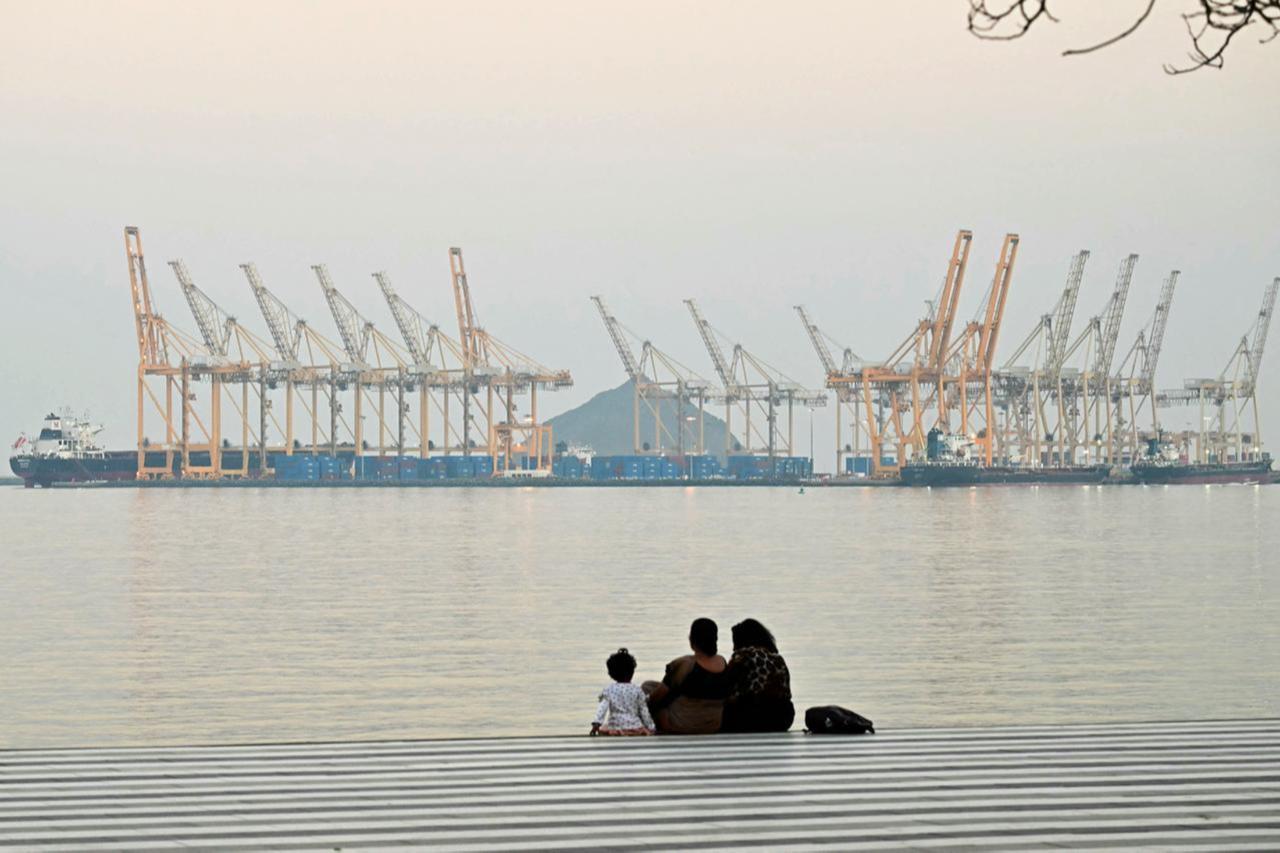
Even the partial reopening of the Strait of Hormuz was framed as a controlled, temporary measure under Iranian coordination, not a concession but a managed extension of leverage.
The terms of the ceasefire did not emerge from Washington's pressure. They emerged from Tehran's refusal to perform the role assigned to it.

Each week of the war produced a larger claim than the last. First came the claim of victory. Then, the assertion that the regime had been eliminated.
Then, the suggestion that a new political order was already taking shape.
Each claim arrived before the reality it described, and each one reached further than the last. By the end, Trump was not merely declaring success. He was narrating a transformation of Iran that had not occurred.
To understand why Trump’s regime change claim fails, it is worth being precise about what regime change requires. The Venezuelan episode established a recognizable template for how externally induced political transformation is supposed to unfold.
Three conditions must converge: the incumbent leadership must collapse or lose the loyalty of its own institutions; a domestic movement must emerge that is willing and capable of filling the resulting vacuum; and the intervening power must gain meaningful access to the strategic resources that motivated the intervention in the first place.
In Iran, none of these conditions are met. Its political institutions, including the Supreme Leader's office, the Islamic Revolutionary Guard Corps, and the Guardian Council, were designed with resilience in mind, capable of functioning even after significant leadership losses at the top, including the death of Supreme Leader Ali Khamenei.
Iran sits atop approximately 209 billion barrels of proven reserves, nearly 12 percent of the global total, and every barrel remains under the control of the state-owned National Iranian Oil Company. No organized domestic movement exists capable of taking power.
To speak of regime change under these circumstances is to mistake noise for signal. The ceasefire does not mark the end of that confusion. It is the latest instance of it.
Trump can say the war is won. He cannot say it to the oil market. The contradiction has not been driven by politics. It has been driven by money. The people enforcing the gap between Trump's claims and reality have not been his political opponents or journalists.
They have been traders, analysts, and shipping companies who have no interest in the outcome beyond needing to know what is going to happen next.
For weeks, financial markets showed little reaction to Trump’s repeated claims that the war was on track or nearing conclusion.
Energy analysts do not treat the closure of the Strait of Hormuz as a temporary headline but as a function of control, access, and risk.
Logistics networks reroute based on conditions, not announcements. According to Lloyd's List Intelligence, several vessels have already paid substantial sums to Iran for safe passage through the strait.
Iran has not been priced as a defeated actor but as an active gatekeeper extracting fees from a waterway it still controls.
The ceasefire has not changed this reality; it confirmed it. The market reaction was immediate. Oil prices fell below $100, equities rallied, and safe-haven flows reversed. But that movement did not follow weeks of Trump's declarations.
It followed a signal from Tehran. Iran remains central to the terms under which the conflict could be paused and managed.
If control over oil and transit had become the implicit measure of success, the terms of the ceasefire suggest that this control was not imposed but negotiated. The Strait did not reopen under pressure. It reopened partially, conditionally, and under Iranian coordination.
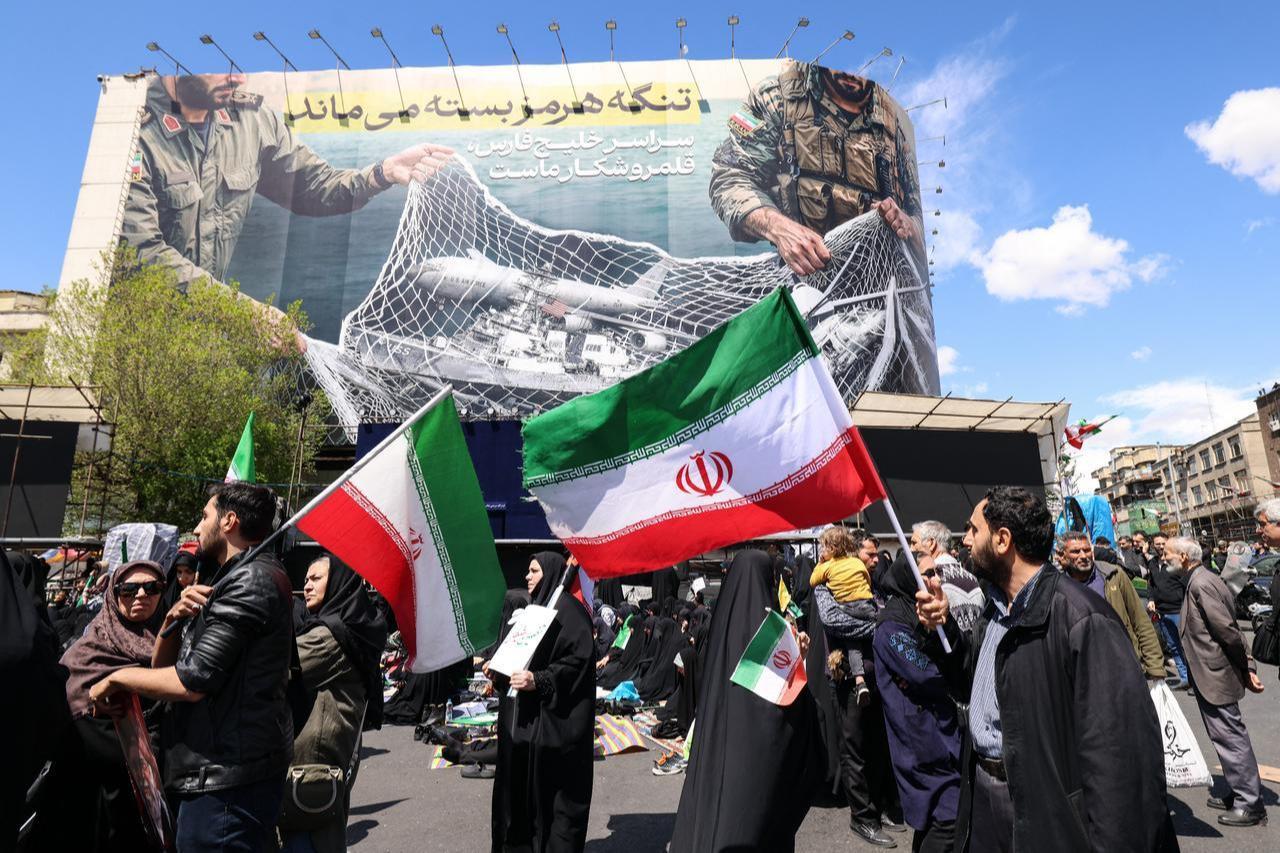
That control has since been made explicit by the Iranian side. Ships transiting the Strait now require Iranian permission, with warnings that unauthorized passage will be met with force.
The immediate pressure has eased, but the structure of risk remains tied to decisions made in Tehran, not declarations made in Washington.
The ceasefire is real. The victory is not. The regime that was declared gone continues to govern. The strait that was meant to reopen under American pressure reopened instead under Iranian coordination.
The war did not produce the transformation it promised. It produced a negotiation with the system it was meant to dismantle.
Trump will continue to describe this differently. He will find language that converts a negotiated pause into a declared victory. But that language will eventually be tested against what actually happens next. The gap between the two has not closed. It has simply moved to the next phase.


 Set as preferred source
 Set as preferred source


 2 min read
 1 min read