Newsletters


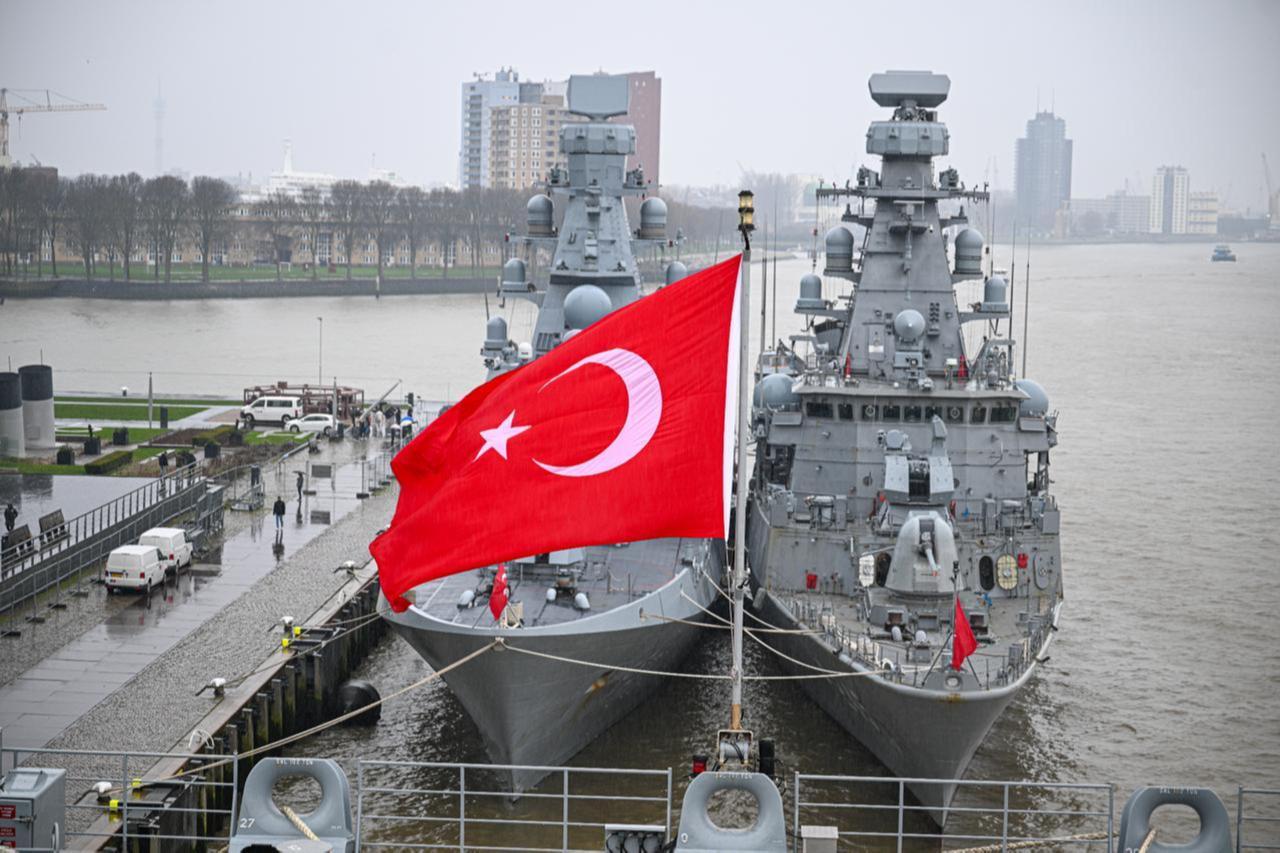


Many Westerners would find it anathema even to think that Türkiye and President Recep Tayyip Erdogan could be the savior of the West’s most important military alliance, NATO.
For more than 10 years, Türkiye under Erdogan has been cast as the source of many evils from Syria to Iraq and Israel-Palestine and from the Caucasus to the eastern Mediterranean and Africa, especially by Türkiye-hating trolls in think tanks and on social media.
But as the host of NATO’s upcoming summit in the Turkish capital, Ankara, on July 7-8, Erdogan could ill afford to have his fellow allies’ agenda get derailed by yesterday’s mistakes or today’s trolls. Those agenda items include ending the Ukraine war, managing the Iran crisis and energy flows from the Middle East, and shaping the alliance’s future.
For the Ankara summit to succeed, Türkiye is going to leverage its unique strengths and pilot the alliance through several choppy waters. These include Erdogan using his personal friendship with U.S. President Donald Trump to temper the latter’s exasperation with his European allies while injecting a dose of realism into European partners about the state of the alliance—all the while managing Ankara’s own issues with Washington and Europe.
Despite its many faults, NATO remains the West’s most important defense alliance and a critical element of Türkiye’s geopolitical strength. Although few NATO allies have stood by Ankara in its critical moments of need—especially during the mid-2010s—being part of NATO’s “standardization agreement” (STANAG) regime helps Turkish firms to deliver goods and services per the world’s highest standards in aerospace, defense, electronics, security, and telecommunications.
Even the most powerful allies benefit from NATO, which turns 80 in 2029. To its leading founder, the United States, the alliance gives a wide geopolitical reach in the Eurasian and African landmasses, lowering the political and economic costs of its forward presence. For Europe, having Washington—still the world’s most important capital—on its side is a huge plus.
Outside the North Atlantic and Euro-Mediterranean regions, NATO is building close ties with such regional powerhouses as Australia, Colombia, Japan, Pakistan, and South Korea, along with a liaison office in Jordan and a regional center in Kuwait City that helps build closer relations with the host country as well as Bahrain, Qatar, and the United Arab Emirates.
In fact, to build and strengthen these bridges, Ankara is working to have the four Gulf Arab countries attend the July summit, as Levent Kemal reported in Türkiye Today earlier this month.
In this context, perhaps the single greatest achievement for Erdogan’s Türkiye will be to persuade Trump that the alliance’s pros still outweigh its biggest con, some allies’ lack of strategic foresight.
In fact, continued U.S. pressure (perhaps coupled with diplomatic finesse) could turn European and Canadian allies’ cons—in the form of chronically low defense expenditures and overall preparedness—into building greater capabilities and ties with each other. That process, in no small measure, owes to the mercurial American president’s protestations that Europe “owes massive amounts of money” to the U.S., driving more European allies to take their defense footing seriously
Türkiye can pilot the NATO ship out of these dire straits.
At the Hague summit last summer, allies agreed to increase their defense spending to 5% of the national income, or more specifically, to spend 3.5% on defense and 1.5% on critical infrastructure. At the Ankara summit and beyond, that decision should translate into U.S. and European allies establishing closer partnerships between their defense, aerospace, and civil engineering companies and their Turkish counterparts to bring tangible benefits to NATO as a whole.
Especially with respect to the Hormuz issue (and similar maritime chokepoints), there is no reason why Turkish shipbuilders could not provide quick and reliable solutions to bolster both U.S. and European allies’ limitations in such fields as mine-clearing and littoral ships as well as aerial and naval drones that could more effectively protect merchant shipping.
The other critical issue for Türkiye and Erdogan is overcoming the inertia in Ankara-EU ties. Here, NATO could help Türkiye as well. At a time when the EU is trying to boost its defense spending—but not necessarily its deterrent capabilities or basic geopolitical awareness—many EU members, other than Greece and the Greek Cypriot administration of southern Cyprus, are building new partnerships with Turkish defense firms.
Poland has bought plenty of Baykar TB2 drones. Spain will be acquiring the Hurjet jet trainer and light combat aircraft and is expressing interest in the country’s fifth-generation National Combat Aircraft (MMU) Kaan. Meanwhile, Bulgaria reached an agreement with Ankara-based Arca Defense for the procurement of $2.2 billion worth of munitions at the SAHA 2026 expo earlier this month. Also at SAHA, Arca signed agreements to provide $1.2 billion munitions to the United States and to build a munitions factory in Estonia for $300 million.
But merely serving as an “arsenal for NATO” is unlikely to lead to the long-term defense and security partnership that both Europe and Türkiye need. If anything, Europe probably worries that additional purchases from Turkish arms companies will inject additional liquidity that will turn Türkiye’s strategic autonomy into full independence from the West. Likewise, Ankara is demonstrably concerned that Europe will use the Turkish defense industrial base as a “stopgap measure” until European countries have rebuilt their defense ecosystem to an adequate level by the 2040s.
An additional challenge is addressing Türkiye’s Greek “cousins” in the mainland and Greek Cyprus—especially tough compromises with Greece over conflicting exclusive economic zones (EEZ) in the Aegean and the eastern Mediterranean will be necessary.
Neither Athens’ maximalist EEZ assertions—especially through the tiny island of Meis (Kastellorizo) to claim 10% of the eastern Mediterranean—nor Ankara’s denial of any real EEZ to the Greek islands of Rhodes and Crete is tenable or sensible. Nor are Greek and Greek Cypriot arms purchases from Israel at a time when elements within the Jewish state are no longer hiding the fact that they are itching for a fight with Türkiye, calling it the “next Iran.”
Although the Greek and Greek Cypriot publics seem a little too receptive to their politicians’ stoking the ambers of old fears against “The Turk,” Ankara would do well not to respond to such provocations. If anything, maintaining its hard-earned status as the “adult in the room” will earn Türkiye even greater influence among NATO circles.
At the grand strategic level, a critical dimension of Türkiye’s leadership within European NATO will involve Russia and two seemingly conflicting but fundamentally complementary goals: Ankara could use its multi-dimensional relationship with Moscow to ensure that the conflict in Ukraine is brought to an end or at least does not spin out of control. Simultaneously, Türkiye could help European NATO allies to build strength to deter Moscow when the U.S. military’s physical presence on the continent is poised to decrease no matter who sits in the White House after Trump.
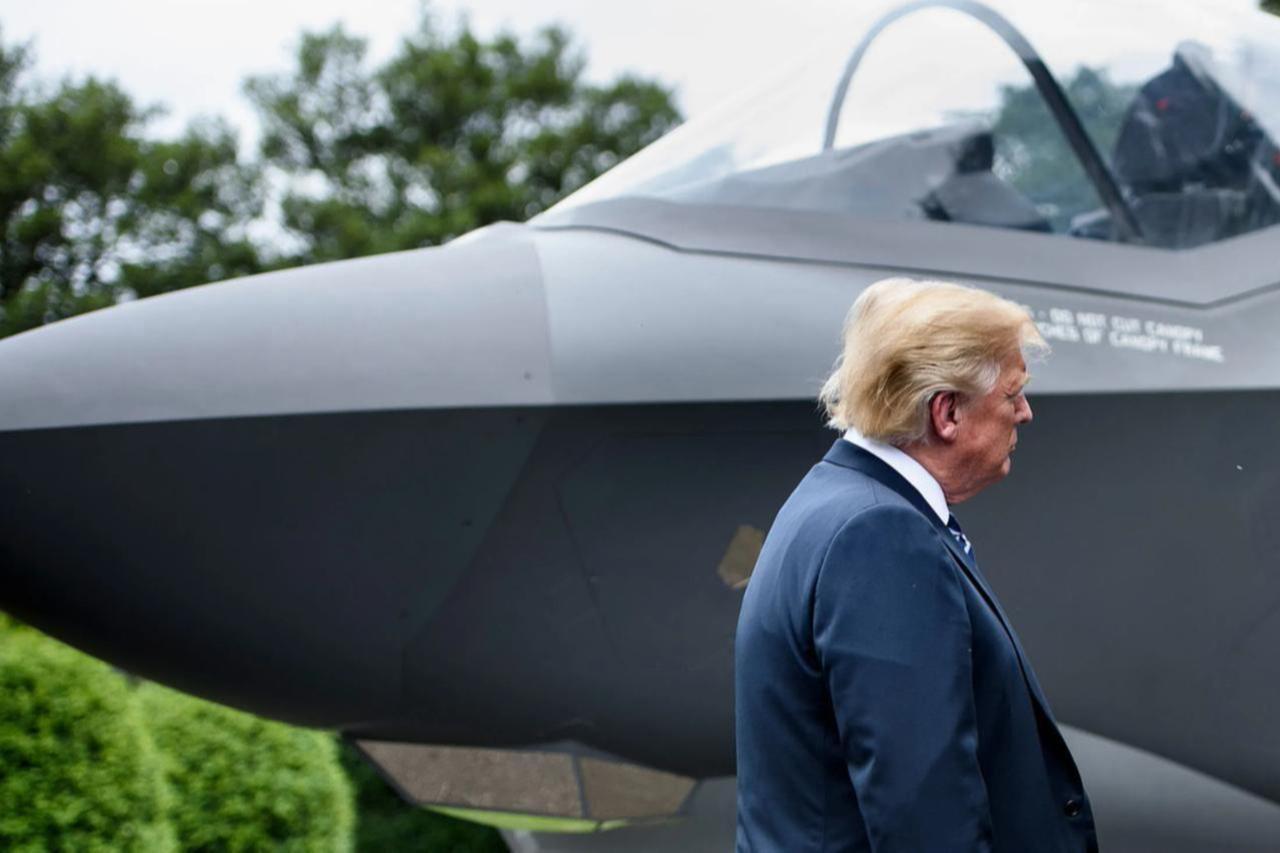

Besides the above, Türkiye is also pressing for the removal of allied sanctions, especially the U.S. Congress’s Countering America’s Adversaries Through Sanctions Act (CAATSA). Slapped on Ankara in the wake of its purchase of the S-400 air defense system from Russia in 2019 (which came in part as the price of normalizing ties with Moscow following the shooting down of a Russian jet in Syria in 2015, when many NATO allies did not stand by Ankara), CAATSA and subsequent clauses in the U.S. National Defense Authorization Act have prevented Türkiye from obtaining the F-35 stealth fighter.
Erdogan continues to express interest in acquiring F-35s, including the six units already produced for the Turkish Air Force that are sitting in U.S. hangars. However, Congressional sanctions prevent Ankara and Washington from moving forward not only on the F-35 issue, but also on other critical files such as the Turkish acquisition of 40 units of the advanced Block 70 of the F-16 Fighting Falcon, the mainstay of the Turkish Air Force.
In the same vein, without the removal of CAATSA, it is debatable whether Ankara would be able to obtain the 80 General Electric F110-GE-129 engines that will power the first 40 units of the MMU Kaan until the arrival of Turkish-design engine, the TEI TF-35000 in the mid-2030s.
On this front, Erdogan’s problem is less Trump and more the U.S. Congress. Although Israel’s popularity took a huge hit among the U.S. public because of the genocide in Gaza and the “forever wars” in Iran and Lebanon, Tel Aviv and its political proxies still hold considerable influence in U.S. politics and media. The recent case of Republican Congress Thomas Massie of Kentucky, who lost his primary to an AIPAC-backed candidate in the most expensive primary contest in U.S. politics, is a case in point.
The government of Prime Minister Benjamin Netanyahu, along with Greece, is pressuring the U.S. Congress to block all defense sales to Türkiye. And unlike the Cold War, neither the State Department nor the Pentagon is acting as pro-Ankara lobbies in Washington.
What will Türkiye’s move be if the hand it extends to the United States is left hanging? That part is unclear, and NATO’s Ankara summit may not offer any clarity, despite recent statements by the U.S. Ambassador to Ankara, Tom Barrack, that “Türkiye’s return to the F-35 program would strengthen NATO.”
It would be fitting of a tragic hero if Türkiye and Erdogan were to contain ongoing fissures among NATO allies, but not the long-term cracks in Turkish-U.S. relations. We will find out in a few weeks.


 Set as preferred source
 Set as preferred source


 7 min read