Newsletters




This article was originally written for Türkiye Today’s weekly economy newsletter, Turkish Economy in Brief, in its April 13 issue. Please make sure you are subscribed to the newsletter by clicking here.
Following the two-week ceasefire declared in the Middle East conflict, the first round of talks between the United States and Iran has concluded in Pakistan without results. While the U.S. side said the Iranian delegation rejected demands to cease its pursuit of nuclear weapons, maritime traffic in the Strait of Hormuz, the world’s most critical oil transit route, has yet to return to normal.
Although the ceasefire remains in place, recent developments show just how fragile the process is.
Even if the Middle East conflict winds down, the world is bracing for a future where "nothing will be the same again." The first signs of this big shift are already showing up in global shipping routes.
Tankers leaving the Persian Gulf are now heading toward the United States to pick up crude oil. Sources say U.S. oil exports have jumped by about 25% since last month, hitting nearly 5 million barrels a day—levels the U.S. market has never seen before.
Due to its “secure supply” and accessibility, U.S. crude has now become more expensive than Brent oil.
Meanwhile, billions of dollars in Gulf capital have begun searching for safer havens. Early signals from Dubai’s real estate sector provide important clues.
According to data shared by DXB Interact, a digital platform that publishes housing market figures in Dubai, the number of property sales dropped from 17,027 between Feb. 2 and March 1 to 11,828 in the four weeks following the outbreak of war. This marks a 30.5% decline in just one month.
Transaction volume in the housing market also fell by 36%, dropping from $16.53 billion to $10.58 billion.
It’s becoming clear that a major shift is underway. As ships leave the region, the same investor behavior seen in Dubai is spreading across other Gulf countries. This isn't just about real estate anymore. Across every sector, particularly finance and tourism, there is a rapid move toward finding new hubs that offer the right balance of being geographically close and, most importantly, secure.
A quick look at the map makes it clear that the ideal country for this is Türkiye. With its long-standing ties, strong diplomatic relations, and strategic position right between Europe and Asia, it is perfectly placed to fill that gap.
Located at the crossroads of the Mediterranean, the Balkans, the Caucasus, Mesopotamia, and the Middle East, Türkiye is already a familiar destination for Gulf investors. Its blend of a developed democracy, a strong military, and investor-friendly policies has consistently drawn their interest.
Now, important signals are starting to emerge from Türkiye as well.
During the ongoing conflict in March, President Recep Tayyip Erdogan received BlackRock CEO Laurence Fink in Istanbul. The meeting with the asset management giant, which oversees more than $14 trillion, focused on potential investments and economic cooperation in Türkiye.
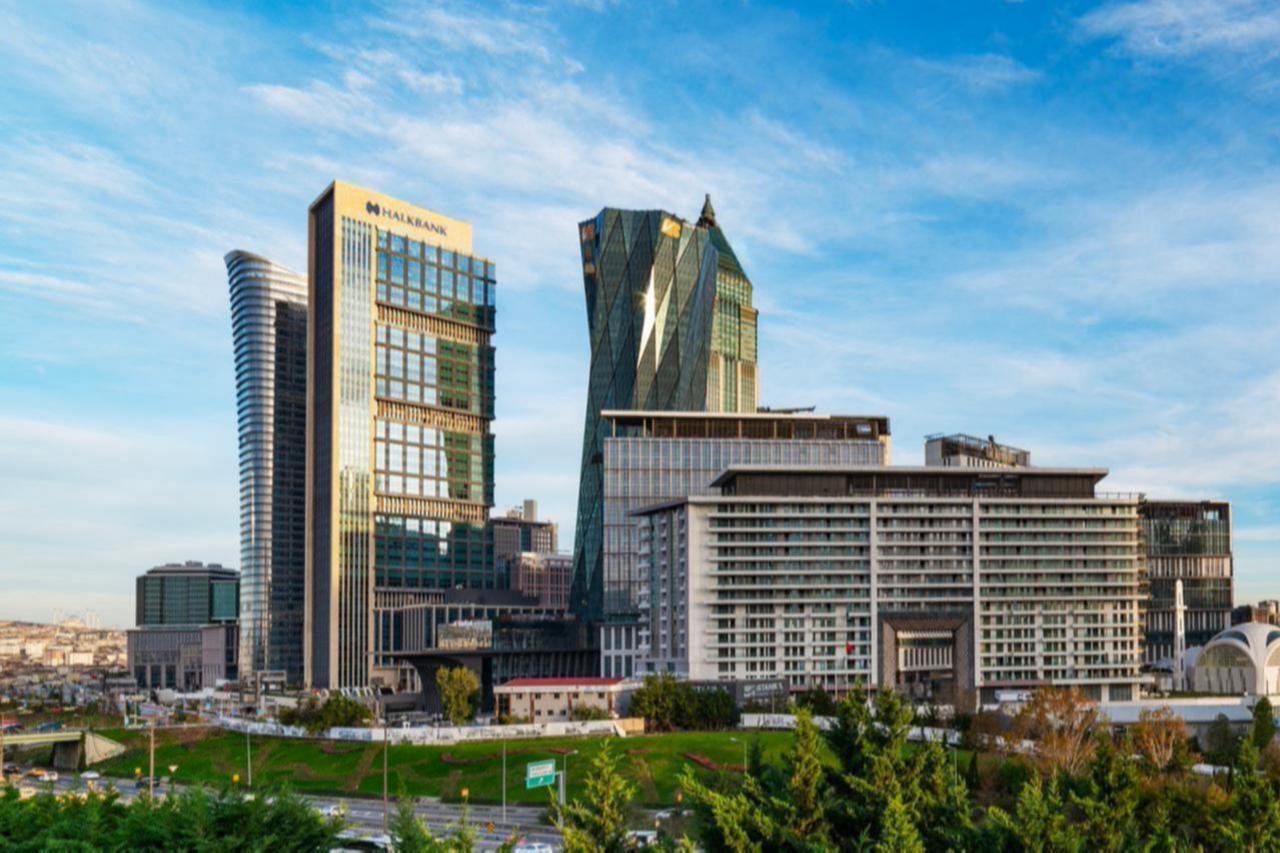
Last week, Erdogan stated, “Our economic team is making intensive efforts to position Türkiye as a strong regional headquarters for multinational companies, transform it into a global hub for transit trade, and make the Istanbul Financial Center one of the world’s leading financial centers.”
Meanwhile, a Bloomberg report suggested that Türkiye is preparing a legislative proposal to expand incentives aimed at attracting foreign companies relocating from Gulf countries during the Iran conflict. The proposal is expected to include various advantages, such as a 50% tax reduction on trade revenues, and may be submitted to Parliament in the coming weeks.
Treasury and Finance Minister Mehmet Simsek also said in a recent broadcast, “We stand out as an island of stability in such a geography. Türkiye has significant advantages. We have reviewed the incentives at the Istanbul Financial Center and will share them. We are evaluating what radical steps we can take to support sustainable production.”
Ahmet Ihsan Erdem, CEO of the Istanbul Financial Center, noted that more than 40 companies, mostly from East Asia and Gulf countries, have contacted them over the past month, signaling growing interest in relocating or expanding operations in Türkiye.
All these developments point to Türkiye emerging as a more attractive base for companies seeking stability, with authorities expected to introduce more advantages in response.


 Set as preferred source
 Set as preferred source


 7 min read