

 Newsletters


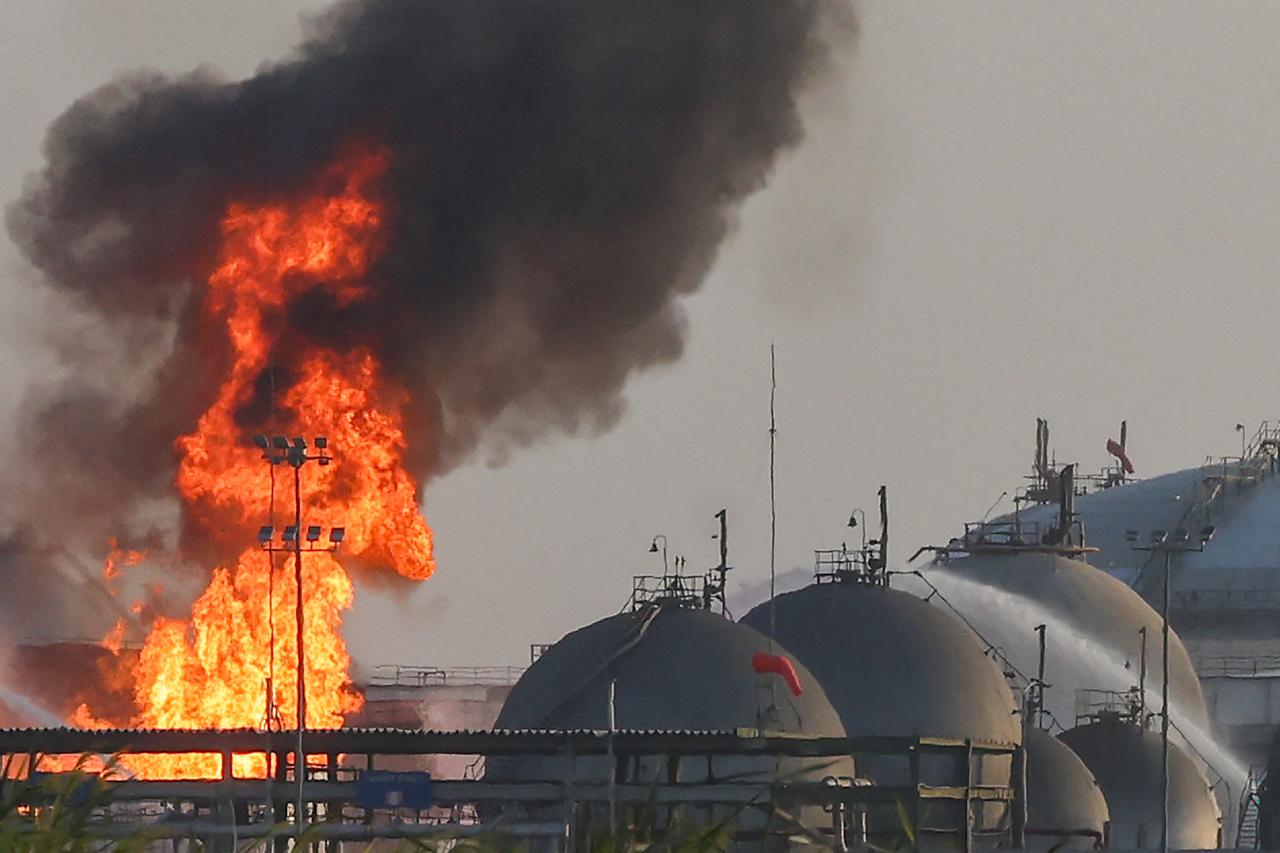


Saudi Arabia owns some of the most expensive air and missile defense systems that money can buy. Last week, they fell short.
An attack by Yemen’s Houthis on King Khalid International Airport in the Kingdom’s capital, Riyadh, killed at least 12 people and wounded more than 300, according to Saudi aviation authorities.
It was the third strike on the airport in a week and the deadliest attack on the Kingdom in more than a decade. It followed Houthi claims of missile and drone strikes on Aramco facilities in Riyadh and Yanbu, and a Houthi declaration that all Saudi airspace outside Mecca and Medina is now a military zone.
Asked whether the United States would join the fight, President Donald Trump said, “We may. We’re gonna look at it.”
Riyadh’s other friends have been quicker.
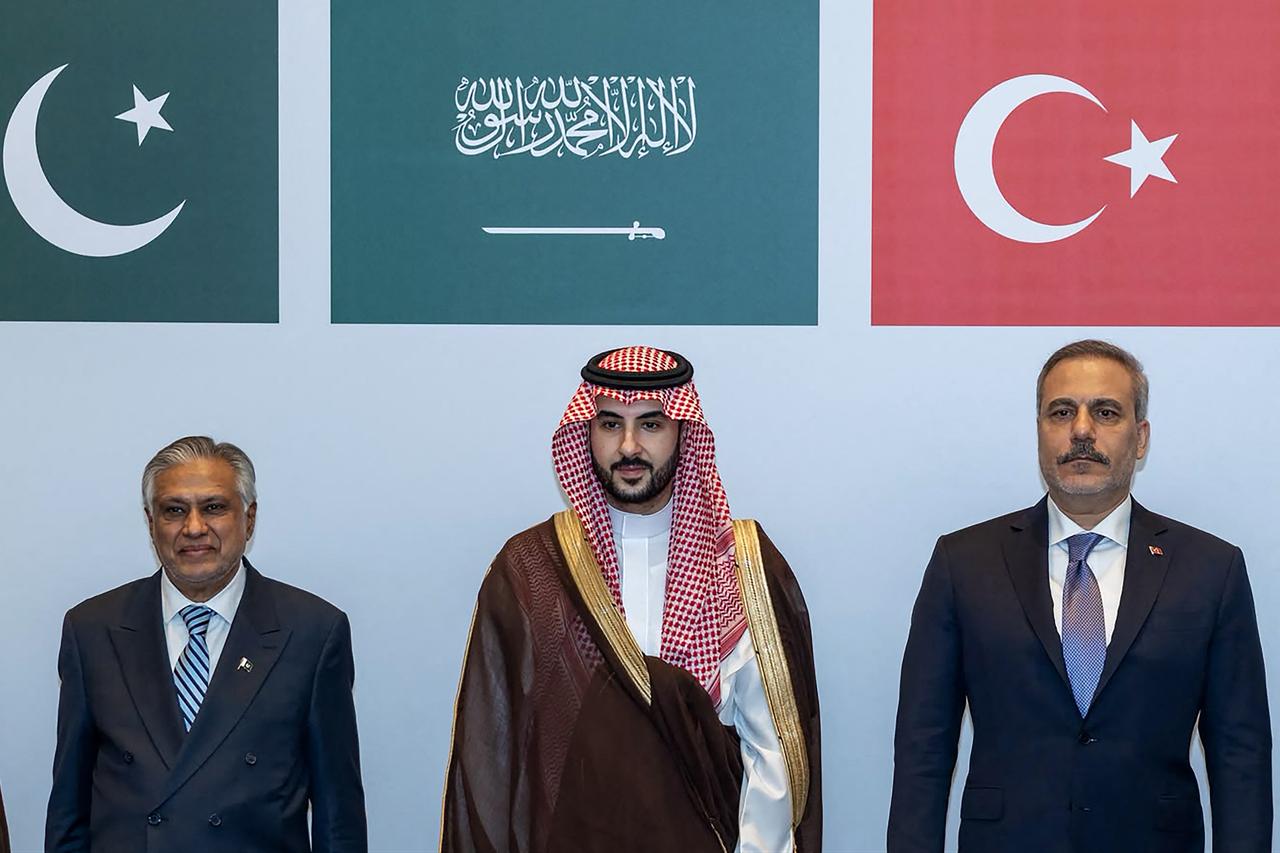
On Oct. 5, Türkiye, Saudi Arabia and Pakistan invoked the Mecca Joint Defense Agreement for the first time. A day later, Turkish officials told Middle East Eye that Ankara would send more air-defenseand electronic-warfare equipment, technicians, and a limited number of troops in the coming weeks, prioritizing the western section of the East-West pipeline, Riyadh, and the holy cities.
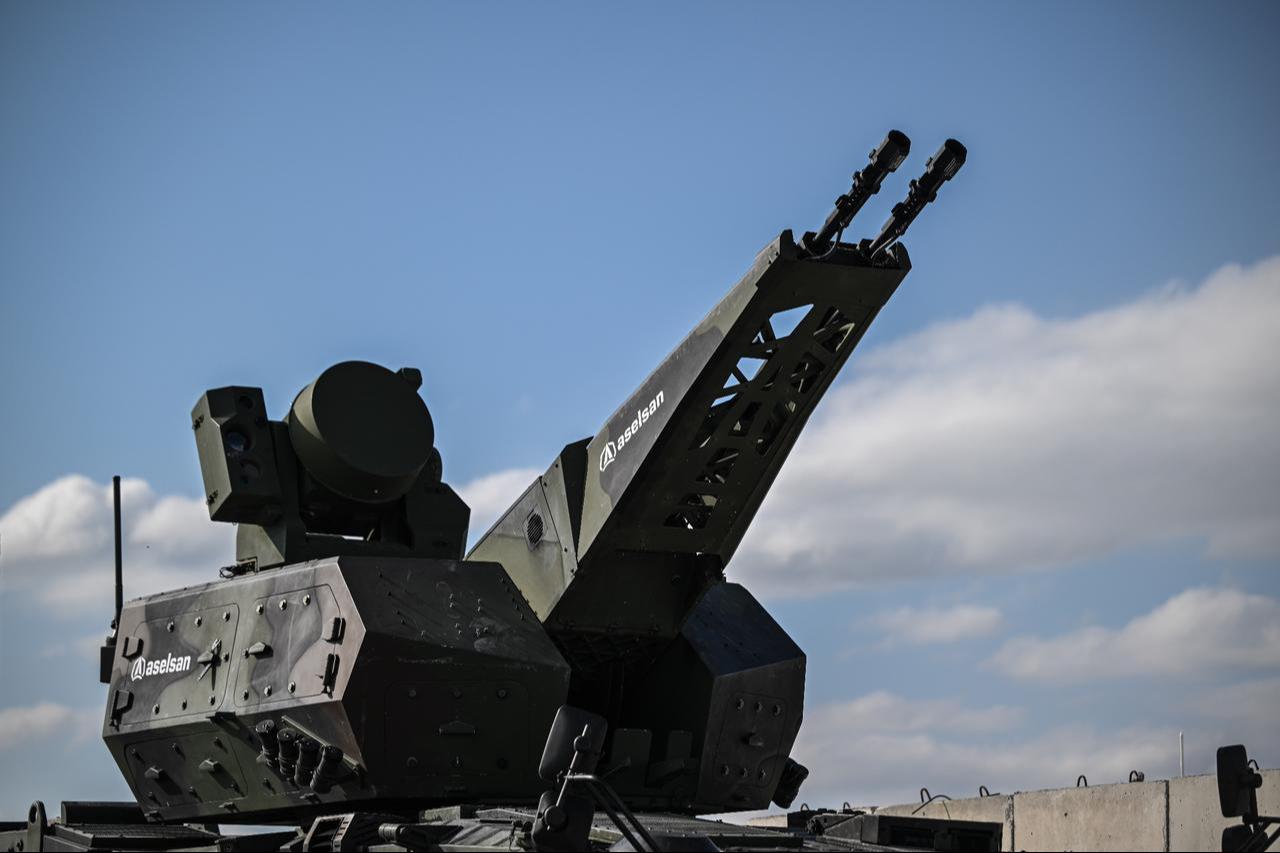
Turkish officials did not name names, but Aselsan's Korkut and other anti-aircraft artillery (AAA) guns from Türkiye’s private and publicly owned defense firms will top the list.
With the end of the Cold War and the arrival of anti-ballistic missile systems like Patriot and THAAD, AAA guns looked like they were headed for long-term storage and, eventually, the museum.
Air defense units around the world barely bothered to announce their mandatory annual gun drills.
Then came the Syrian civil war, Russia’s war on Ukraine, and America and Israel’s war on Iran. With them came cheap quadcopters packed with explosives and one-way attack drones like the Shahed and its Russian sibling, the Geran.
Their warheads are small, but their accuracy is nothing like the crude rockets that Hamas used to fire at Israel, most of which Iron Dome swatted away with ease.
The aggressor no longer has to choose between a slow, inaccurate projectile and a $10 million missile that a $4 million interceptor might knock down. The defender, meanwhile, cannot afford to spend that $4 million interceptor on a drone that costs less than a family sedan.
While Türkiye works on its own air and missile defense systems, such as Hisar and Siper, its close-in guns have already reached the battlefield. Middle East Eye reported on Oct. 5 that Ukraine has been using Korkut against Russian drones and cruise missiles since earlier this year.
A Ukrainian official told the outlet that the system had been “pretty much successful,” that its teething problems were fixed with minor adjustments, and that Kyiv would happily buy more if the price were right.
Given Ukraine’s own successes in drone interception with systems such as CENTRE ZAKHYST’s ODIN, that is high praise for Aselsan, Korkut’s producer and Türkiye’s most valuable company with a market cap of about $32 billion and one of Europe’s top 10 defense firms, according to Anadolu Agency.

In its 35 mm form, Korkut is a twin-barreled gun that fires up to 1,100 rounds per minute to an effective range of 4 kilometers. Its ATOM programmable airburst rounds detonate just ahead of the target and throw a cloud of tungsten pellets into its path. Aselsan lists fighter jets, helicopters, drones, drone swarms, cruise missiles and air-to-ground missiles among its targets.
An air defense battery typically has three-gun vehicles and one command-and-control vehicle. Late last month, Aselsan demonstrated Korkut 35 on an 8x8 wheeled vehicle to delegations from 12 countries at the Karapinar range in Konya. It shot down fixed-wing and delta-wing kamikaze drones and hit a moving ground target while on the move itself.
Its little brother, the Korkut 100/25, uses 25 mm smart ammunition against first-person-view and tethered drones, the kind that have turned Ukraine’s trenches into shooting galleries.
But that precision is hardly cheap. Romania is paying about €1,120 ($1,255) per round for German Rheinmetall’s comparable AHEAD ammunition, each of which carries 152 tungsten sub-projectiles, according to Defense Express. With a typical burst of about 10 rounds, a single engagement costs more than €11,000.
The often-quoted figure in the Turkish press for the indigenous ATOM is expected to reach $750 a round, and that figure has probably gone up because of the rising cost of critical raw materials, especially titanium, tungsten and molybdenum, the most critical minerals used in defense industrial processes.
That is still pocket change next to a Patriot. More to the point, every drone that a gun shoots down is one less interceptor spent, and Gulf militaries learned during the Iran war how quickly those run out.
As Middle East Eye reported in May, the Gulf states’ defenses held up against ballistic missiles but ran short of ammunition and lost several long-range radars to Iranian drones.
First, an important caveat: Initial assessments suggest that it was a ballistic missile that hit Riyadh’s airport, and no gun on earth stops a ballistic missile. Türkiye’s own Siper is several years away from a credible capability against such a threat. For that, Saudi Arabia still needs Patriot, THAAD and, yes, Washington.
But the Houthis do not fire missiles alone. They claimed the Oct. 3 strike on the Aramco facility in Riyadh as a combined missile and drone operation. They have claimed drone attacks on facilities along the East-West pipeline, while Iran-backed militias in Iraq have done the same against oil facilities in the Eastern Province. Drones exhaust the interceptors, blind radars, and pave the way for the missiles.
Korkut-class guns are filling that gap in nine countries, according to Aselsan CEO Ahmet Akyol, who said new export contracts will be announced within days. On Oct. 2, the company disclosed a €488.5 million air defense export contract with an unnamed foreign customer.
We do know from Middle East Eye’s May report that Saudi Arabia and Qatar have already signed contracts for the Korkut 100/25. Likewise, Turkish technical teams, air-defense systems and electronic warfare equipment have been protecting Saudi energy infrastructure since last year.
Meanwhile, Türkiye’s state-owned MKE signed a memorandum with Saudi firm Al Talbiah in February to produce its Tolga system jointly in the Kingdom.
While it requires confirmation, Pakistan, the Mecca pact’s third leg, reportedly already operates the 35 mm Korkut.
If Turkish air defenders deploy to Saudi energy sites, they will bring what they know how to use. If that is also what the Saudis are buying and what the Pakistanis are operating, the three armies share training, ammunition and spare parts from the get-go.
The guns could arrive in three ways: Turkish army batteries with Turkish crews under the pact, which is the fastest; Saudi orders moved to the front of Aselsan's production line; or local assembly, which the Tolga memorandum already foresees. Private contractors, rather than active-duty personnel, might be involved as well.
Of course, there is still the political process. Before any Turkish troops could be deployed to the Kingdom, the Turkish Parliament will have to ratify the Mecca Pact as well as the deployment.
Ruling Justice and Development Party spokesman Omer Celik said on Oct. 7 that the agreement would be submitted “within a few days.”
While Aselsan is the main contractor on Steel Dome, Türkiye’s integrated, multi-layered air and missile defense architecture, other Turkish companies are developing products for international buyers who worry more about small drones than powerful ballistic missiles.
MKE’s Tolga is less a single weapon than a kit. It combines the Gokboru AESA radar, acoustic and electro-optical sensors, and a jammer for “soft kill” with 12.7 mm, 20 mm and 35 mm guns and their own anti-drone ammunition for “hard kill.”
A laser and the Enfal-17 missile are being added, according to EDR Magazine. A stabilized naval version has been tested aboard the Turkish Navy’s TCG Beykoz, and MKE is exploring whether to fit Tolga to civilian vessels sailing through high-risk waters, Janes reported. With the Houthis back in the Red Sea, the timing is not accidental.
In the private sector, Samsun Yurt Savunma (SYS), the group behind the Canik brand, offers Trakon, a remote-controlled weapon station built around Canik’s heavy machine guns.
The Turkish Defense Ministry selected a Trakon variant as the close-in weapon system for the navy’s Hisar-class offshore patrol vessels. SYS has also begun exporting its Canik M3 Falcon, a 12.7 mm gun designed to shoot down Shahed-type drones from helicopters to Pakistan and Azerbaijan. The company says it is in talks with Gulf countries.
One rung up sits Aselsan's own Gurz, which puts Korkut guns and Sungur and Goksur missiles on a single vehicle. On Oct.5, the defense company signed a €2.46 billion contract for “hybrid air defense systems,” the largest in its history, although it has not confirmed that the deal covers Gurz.
Of course, even allies and friends need to get in line. While Ukraine wants more Korkuts, Iraq is reportedly finalizing a purchase of 20 systems, and Qatar is waiting as well; Aselsan has to equip Türkiye’s own Steel Dome system.
For years, the Gulf bought the most expensive shields on the market, only to learn that cheap projectiles can still sneak through. Humble-looking, Turkish-made anti-aircraft guns will save the day now.


 Set as preferred source
 Set as preferred source


 2 min read


 1 min read


