Newsletters




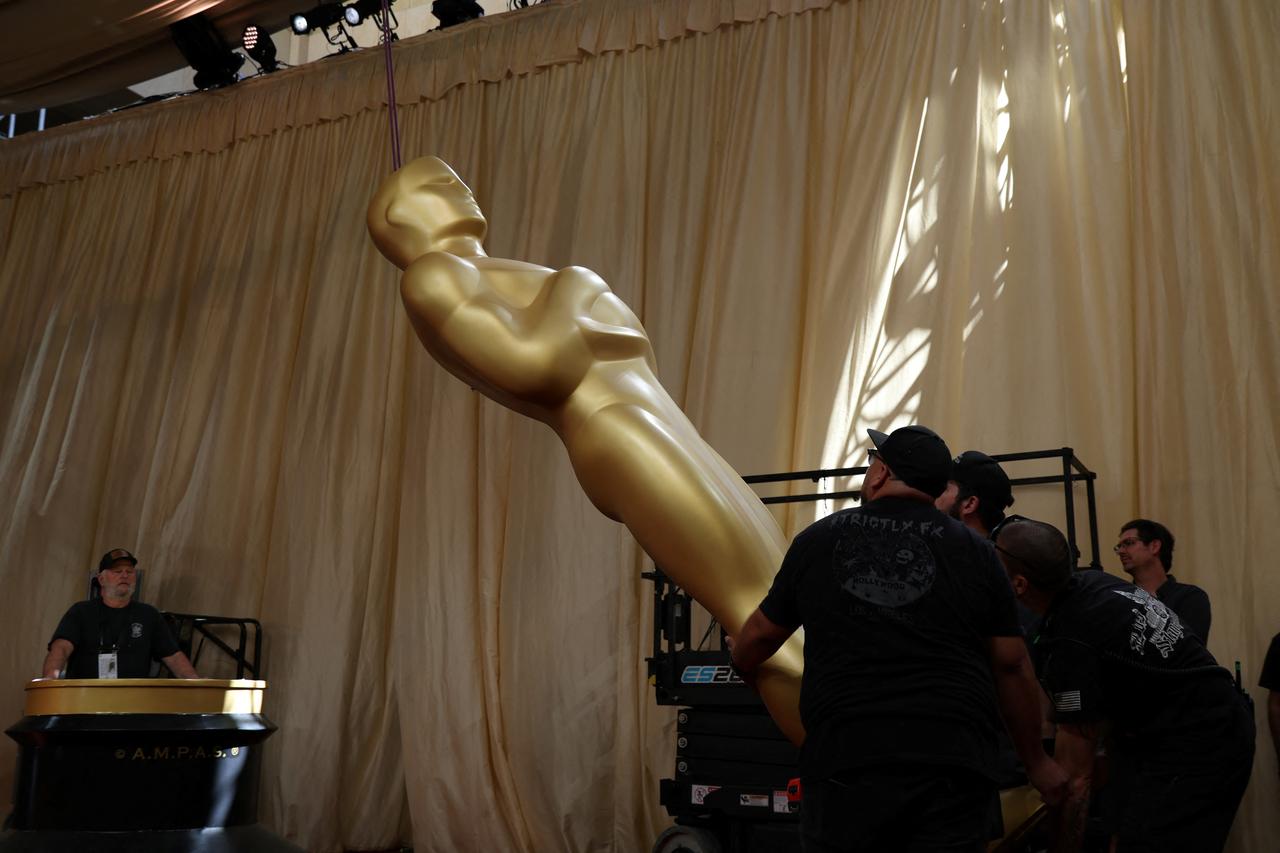
Every year, the Oscars rediscover the same problem: the world refuses to stay outside the theater, and someone eventually decides the script is optional.
In 1973, the ceremony’s carefully choreographed ritual broke.
After winning Best Actor for "The Godfather," Marlon Brando refused the award and sent Sacheen Littlefeather to the stage. Her speech condemning Hollywood’s treatment of Indigenous people stunned the audience and set off one of the most controversial moments in Academy Awards history.
More than 50 years later, the debate has not changed. Every awards season, someone gets offended and declares that the Oscars should “stay out of politics.” And yet politics keeps appearing on the stage, usually in careful doses.
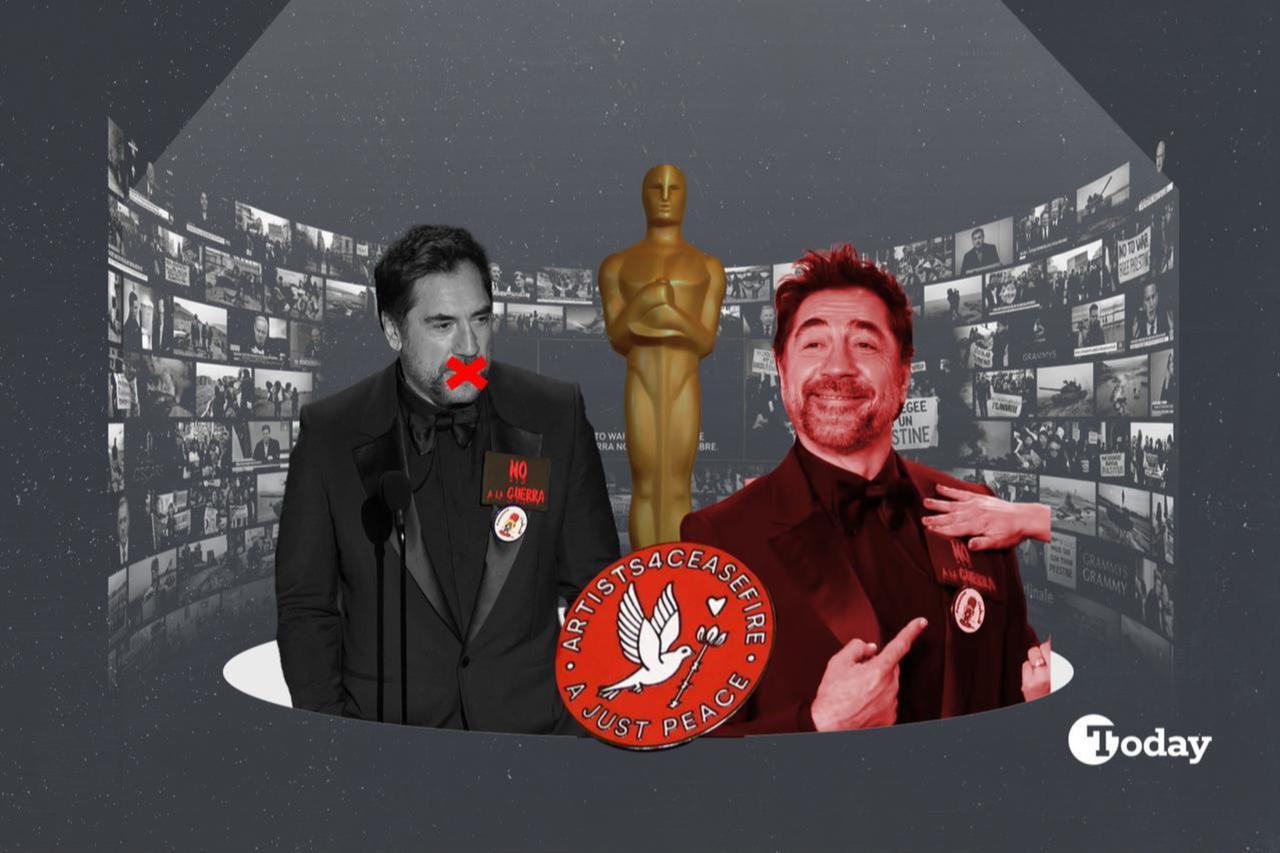
At the 2026 ceremony, it arrived in the form of a short sentence delivered by Javier Bardem: “No to war and free Palestine.”
The line drew loud applause inside the Dolby Theatre, and it became one of the clearest political moments of the evening. Several guests wore “Artists4Ceasefire” pins, and documentary filmmakers used their speeches to warn about democratic erosion and violence.
Yet the statements were brief and almost felt carefully delivered. Hollywood’s biggest night once again found itself navigating a familiar tension: how to acknowledge the conflicts shaping the world without pushing the ceremony into territory that could threaten the institution hosting it.
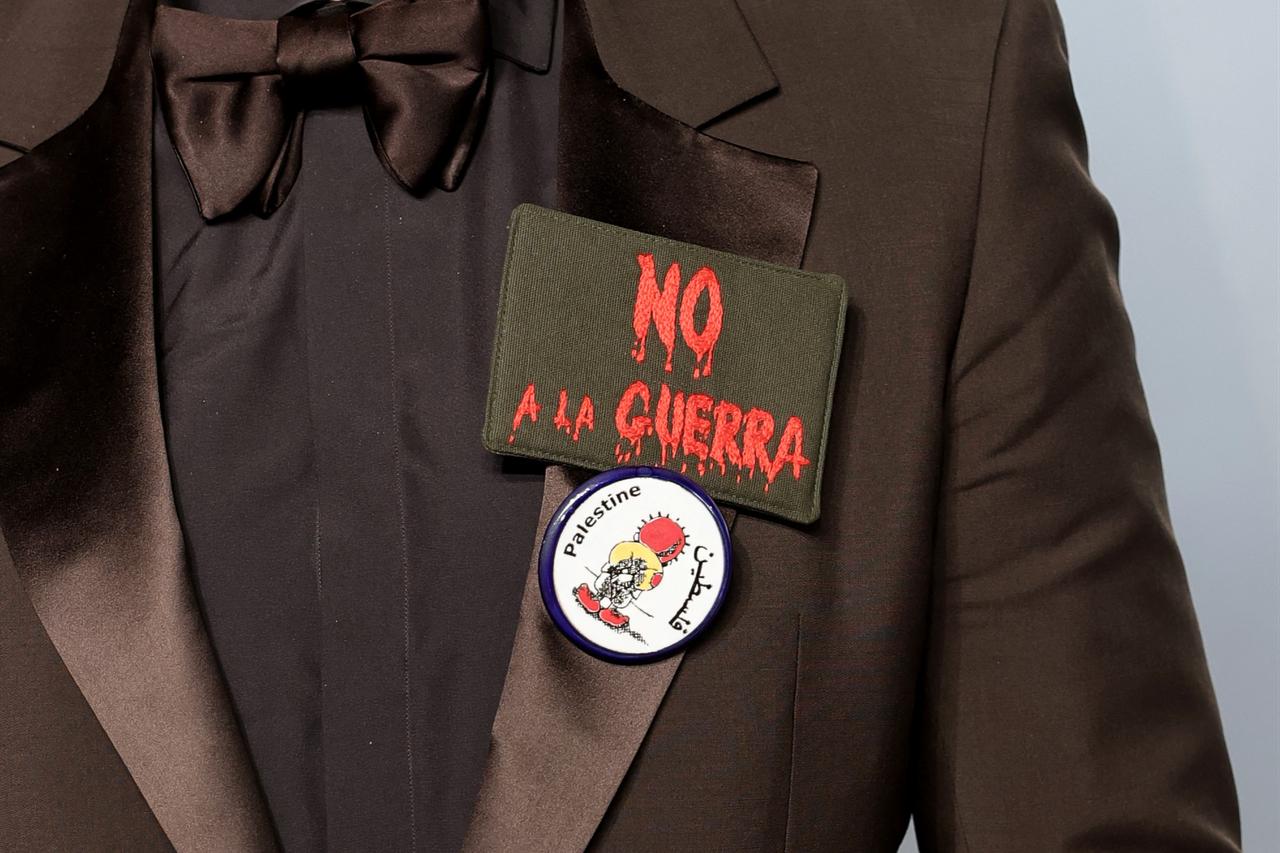

The tension visible at the Oscars has been unfolding across the wider awards circuit.
In recent months, major cultural events have been forced to navigate the same uneasy balance between artistic celebration and political expression.
Golden Globes
The Golden Globes in January offered an early example of how difficult that balance can be.
The ceremony drew criticism after host Nikki Glaser and presenters did not mention the killing of Renee Nicole Good, who had been shot by a federal immigration agent in Minneapolis just four days earlier. Some attendees quietly signaled their reaction on the red carpet.
Actors including Mark Ruffalo, Natasha Lyonne and Wanda Sykes wore pins reading “ICE Out” and “Be Good,” referencing both immigration enforcement and Good’s death.
Glaser later acknowledged how carefully the show had navigated the issue.
Speaking on “The Howard Stern Show,” she explained that several political jokes had been removed from her monologue, including a double entendre about Immigration and Customs Enforcement and a joke referring to Donald Trump.
“It’s hard to strike the right tone,” she said. Even a joke suggested by comedian Steve Martin about renaming the Beverly Hilton the “Trump Beverly Hilton” was ultimately abandoned. The result was a ceremony where the political tension surrounding the moment remained visible, but mostly at the edges of the stage.
2026 Grammys
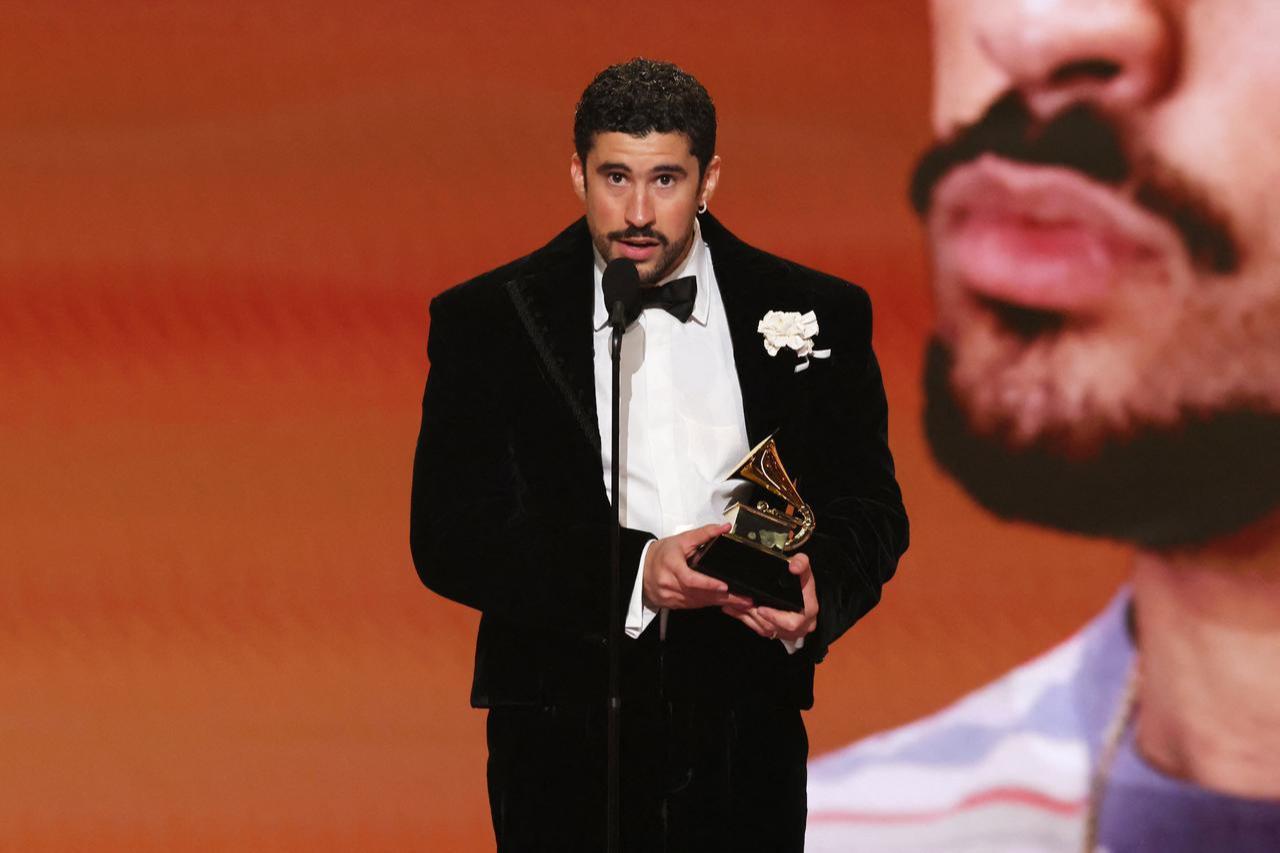
The political tone became even more explicit at the 2026 Grammys.
Puerto Rican artist Bad Bunny used part of his acceptance speech to criticize U.S. immigration enforcement, declaring “ICE out” as he addressed the audience. The remark echoed a theme that would resurface weeks later on an even larger stage.
During the Super Bowl LX halftime show in February, Bad Bunny became the first solo performer to deliver a fully Spanish-language set, celebrating Latino culture before one of the largest television audiences in the United States. The performance triggered a political reaction of its own, with U.S. President Donald Trump calling it “absolutely terrible” and “an affront to the Greatness of America.”
Billie Eilish delivered a similarly direct remark from the stage, telling viewers that “no one is illegal on stolen land.” Other performers appeared wearing protest pins opposing immigration raids, reinforcing the sense that immigration policy had quietly entered the evening’s celebration of music.
Berlinale
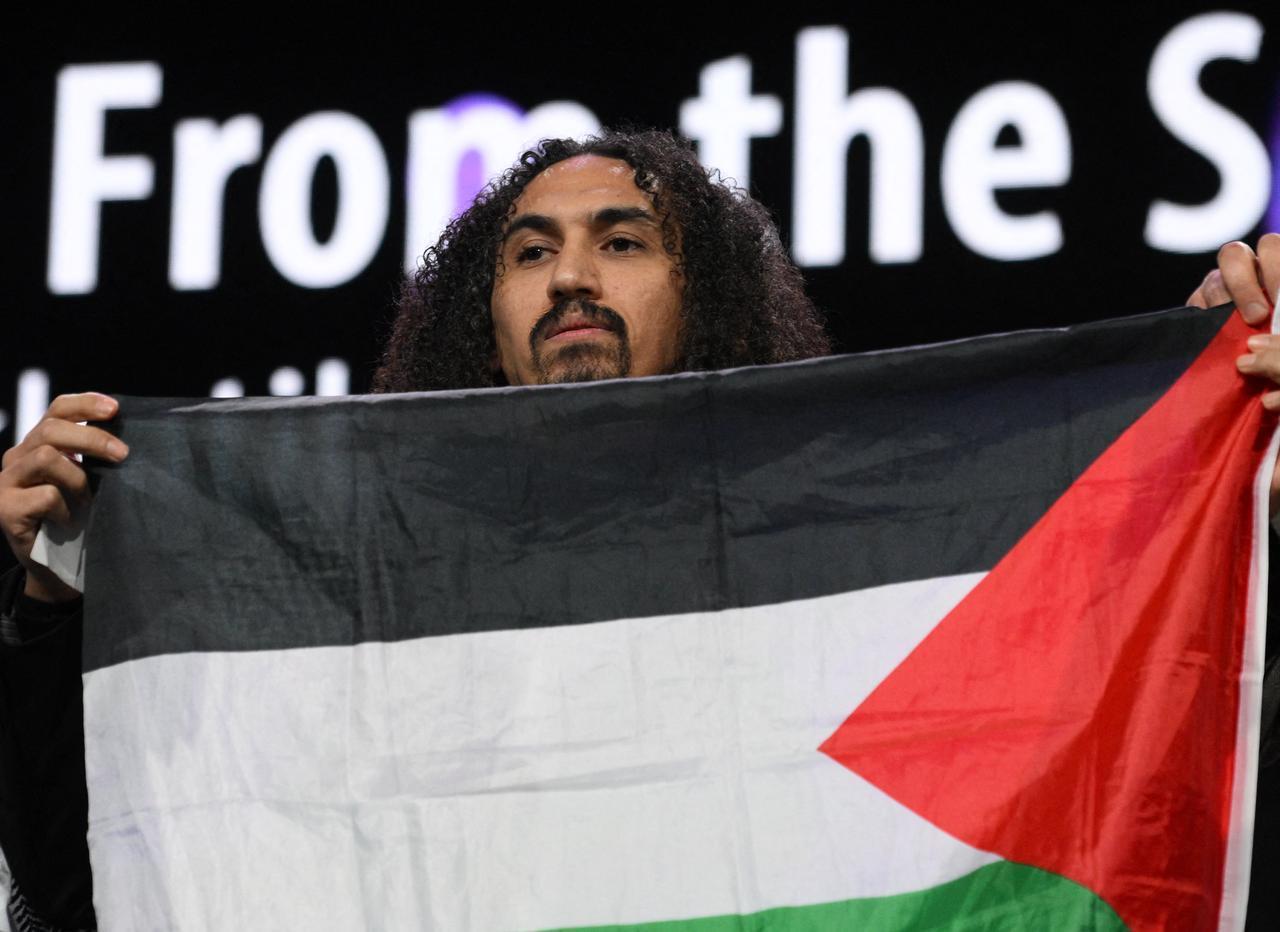
Film festivals have faced an even sharper version of the same dilemma.
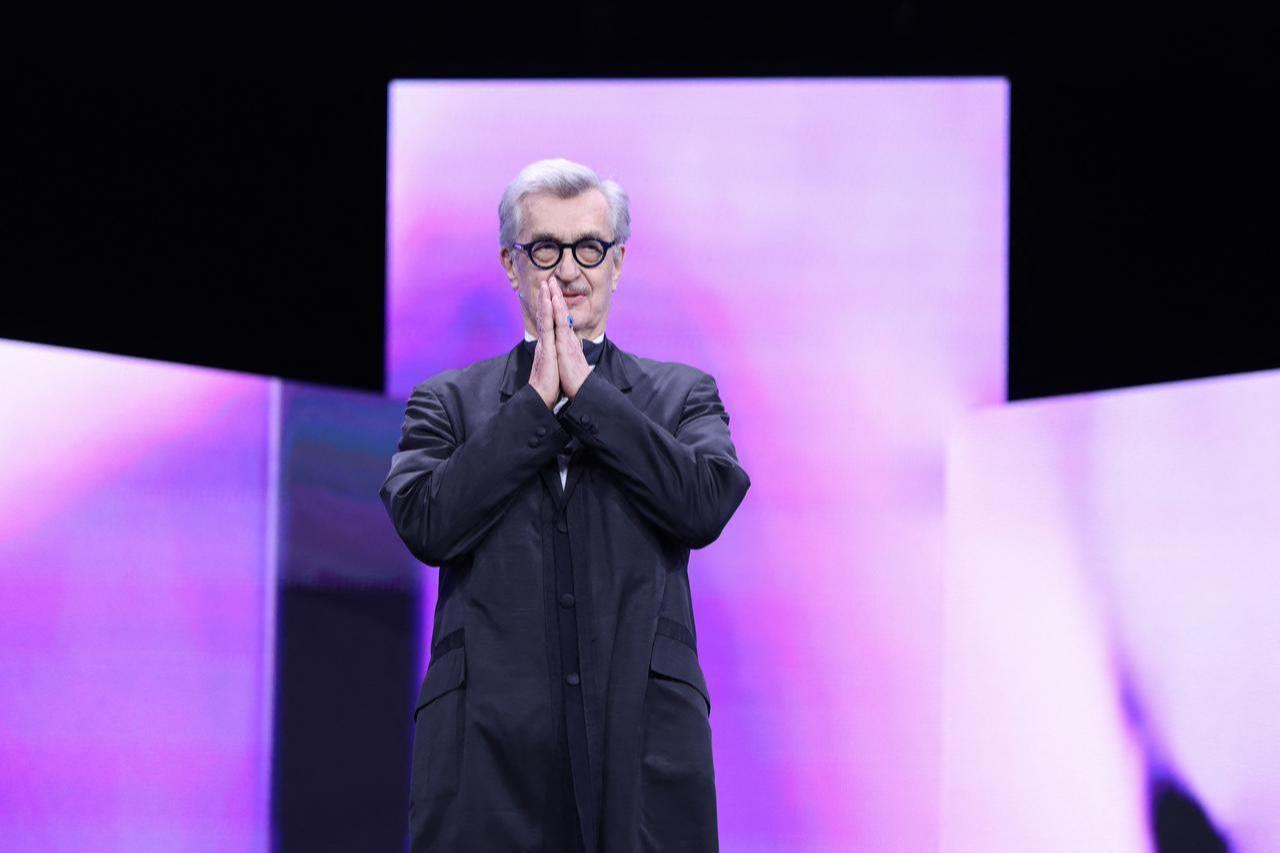
At the Berlin International Film Festival earlier this year, jury president Wim Wenders argued that filmmakers should avoid turning cinema into a political forum. Speaking about the role of film, he suggested that movies influence “the values of individuals” rather than political decisions.
The comments quickly raised questions about the festival’s own identity. On its official website, the Berlin International Film Festival describes itself as a platform for the critical exploration of social issues and is often considered “the most political of the major film festivals.”
Criticism followed swiftly. Turkish director Emin Alper rejected the idea that filmmakers could separate their work from political reality, arguing that in countries experiencing conflict or repression, politics becomes “a matter of living and breathing.” Indian writer Arundhati Roy also condemned the notion of artistic neutrality, warning that claims of distance from politics risk silencing conversations about war, violence, and injustice.
The backlash was not limited to public statements. More than 80 filmmakers, actors and industry professionals signed an open letter criticizing the Berlin Film Festival’s leadership for what they described as insufficient engagement with the war in Gaza.
Taken together, these episodes suggest that the tension surrounding awards season is not only about politics entering cultural spaces. It is also about growing impatience with silence.
Actors, musicians, and filmmakers occupy some of the most visible platforms in public life, often starring in projects that claim to address injustice, migration, or war. For many viewers, cultural visibility now carries an expectation of political honesty.
Part of the shift lies in the way cultural figures have come to occupy a much larger role in public debate.
Actors, musicians, and directors are no longer simply entertainers appearing briefly on screen or stage. Through interviews, social media, and promotional campaigns, they are now constant presences in public life.
Films and television series regularly market themselves as socially conscious projects. Awards campaigns frequently emphasize how a story raises awareness about injustice, discrimination, or historical trauma. In that environment, the distance between artistic narrative and personal silence can become difficult to sustain. And honestly, it looks hypocritical.
Audiences have grown more attentive to that gap. A performer who spends months promoting a film about migration, war, or systemic inequality can somehow find it difficult to respond when questions arise about whether those themes extend beyond the screen.
The tension is sharpened by the way political language itself has become embedded in the cultural industry. Film festivals, awards campaigns, and streaming platforms routinely frame their programming as socially engaged or historically important.
Once art is presented as a vehicle for confronting injustice, the people presenting it inevitably become part of that conversation as well.
Much of the frustration stems from the sense that these causes have also become commodified.
The language of activism now appears regularly in promotional campaigns and awards season messaging, sometimes resembling the corporate branding seen during events such as International Women’s Day or Pride Month, where companies celebrate progressive values while facing criticism over workplace inequalities behind the scenes.
When the same themes that generate cultural capital on screen are met with hesitation off stage, the contrast becomes difficult to ignore.
The broader political climate has also complicated the equation. Rising polarization and the growing influence of far-right governments have made many public figures more cautious about openly taking positions. At the same time, the visibility that makes speaking risky also gives cultural figures a degree of protection and reach unavailable to most people.
Yet some artists have chosen to use that reach anyway. Musicians such as Billie Eilish and Bad Bunny used major stages to criticize immigration policies and speak about displacement, while actors, including Javier Bardem, used the Oscars stage on Sunday to condemn war and call for a ceasefire.
At the Berlin International Film Festival, Turkish director Emin Alper argued that in societies facing repression or conflict, politics becomes “a matter of living and breathing,” and writer Arundhati Roy warned that claims of distance from politics can silence urgent conversations about war and injustice.
In that environment, the expectations surrounding cultural visibility have shifted. The red carpet is no longer seen only as a celebration of artistic achievement. It has also become one of the few global stages where artists can address audiences measured not in thousands, but in millions.
Ultimately, the ceremony still seems to be bound to a script. Producers plan every second of the broadcast, publicists prepare talking points, and presenters rehearse their lines.
Yet every awards season, someone steps slightly outside that choreography. A sentence slips through, a pin appears on a lapel, or a stage meant for celebration briefly becomes a platform for confrontation.
More than 50 years after Marlon Brando refused his Oscar, the industry still hopes the script will hold.
Increasingly, many demand that the script be rewritten.


 Set as preferred source
 Set as preferred source


 4 min read