Newsletters


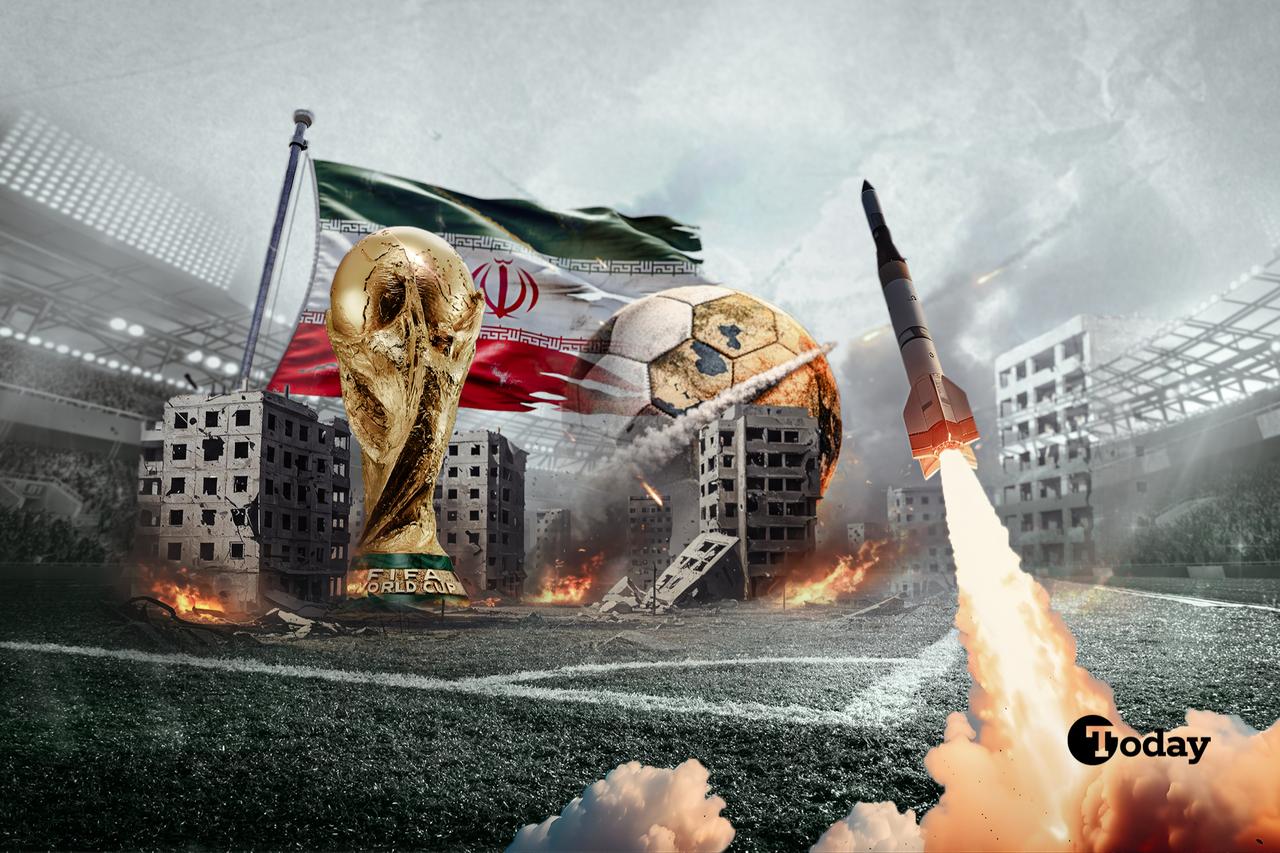


Operation Epic Fury is on schedule to befall the Westward Look Wyndham Grand out in the Arizona desert, where the Iranian national football team is set to pitch camp and battle for victory at the 2026 World Cup.
“President Trump reiterated that the Iranian team is welcome to compete in the World Cup,” FIFA president Gianni Infantino said in the calm voice of a man inviting a hurricane to enjoy the buffet.
Despite the Iranian sports minister's statement that the country is in no position to participate in the game, no official decision has come out yet.
From June 11 through July 19, the U.S. is liable to resemble the world’s biggest geopolitical tailgate party, except the grills are smoking and half the guests brought old grudges in their picnic baskets.
Iran’s opening volleys arrive on June 15 in the well-watered suburbs of Los Angeles, where the lawns are green, and several Middle Eastern national squads will be bivouacked like neighbors at a particularly tense street party.
Saudi Arabia, Qatar, and Jordan will be in missile range, which makes the whole thing feel less like a soccer tournament and more like somebody parked a disarmament summit beside a swimming pool.
The weather will be doing its part. Arizona summers can get up to 40 degrees Celsius, which is the kind of heat that makes even a cactus think fondly about shade. Still, the Iranian players earned their desert reward the hard way. They clawed through a 16-match qualification campaign that sent them touring football’s less-frequented outposts, including Turkmenistan and North Korea. By comparison, Arizona probably looks like a spa weekend.
That, however, was the easy part.
The actual Middle Eastern war rumbling in the background has a way of making a full-board reservation at a desert resort look faintly farcical. Yet FIFA officials, who have always possessed the serene optimism of cruise directors steering through rough seas, say everything remains on schedule. Backchannels are humming. The show goes on.
But the Iranian squad, the so-called Team Melli, will not exactly arrive as a tidy platoon marching in step. As protests against the regime have swelled outside Iran, so has tension among the players themselves, who are caught somewhere between national duty, personal conscience, and the professional obligation to keep kicking a ball where somebody tells them.
Take Mehdi Taremi. In quieter times, he might have been the sort of guest who lounges comfortably at the Westward Look, gazing across the Sonoran Desert and pondering his third World Cup appearance while sipping something with a lime wedge in it. But with global superstars like Cristiano Ronaldo and Kylian Mbappe attracting the flashbulbs, it may be Iran’s star striker Taremi who feels the heaviest spotlight.
He scored twice against England in the last World Cup and once counted as one of the government’s best-known supporters. Israel even asked that he be barred from the 2018 tournament in Russia. Times change. After security forces killed protesters in Iran, Taremi quietly stopped celebrating goals for his club, Olympiacos, the Greek powerhouse.
Then came rumors. As bombs fell on Tehran, somebody announced that Taremi was quitting football altogether and heading home to fight for the government. One Italian sports paper ran the headline, “I’m going to war!” which sounded dramatic until it turned out to be entirely fictional. On March 8, Taremi calmly appeared for Olympiacos and played as usual.
Other players have voiced their discontent more plainly. Defender Hossein Kanaani and forward Sardar Azmoun have both spoken out, with Azmoun writing on social media, “I don’t care if I’m sacked. Shame on you for killing people so easily.”
At least Azmoun still has a job to risk. Fellow Iranian footballer Amir Nasr Azadani lost his career in 2022 when he was sentenced to death for protesting the death of Mahsa Amini, the 22-year-old woman who died in police custody. After international outrage, his punishment was reduced to 26 years in Dastgerd Prison, which is the sort of career setback most athletes never plan for.
Iranian football has always lived in a peculiar neighborhood where sport, politics, and religion share the same living room. Some clubs have direct ties to the state. One first-division team is even owned by the Islamic Revolutionary Guard Corps. Every player has completed national service. Loyalty is expected, suspicion plentiful, and the phrase “fifth column” occasionally drifts through the air like an unwelcome referee’s whistle.
The World Cup has seen these tensions before. Iranian players have worn black armbands, declined to sing the national anthem, or otherwise registered quiet dissent. Yet the tournament itself often manages a peculiar kind of truce.
For all its drama, the World Cup has mostly avoided the Olympic habit of large-scale boycotts. The closest FIFA came to this was in 1974, when the Soviet Union refused to travel to Chile for a playoff and forfeited the match by default.
Politics and football remain inseparable, of course. As Simon Kuper, author of “Football Against the Enemy,” once put it, the game has “the ability to start or stop wars, fuel revolutions and keep dictators in power.” But soccer players themselves generally treat political questions the way cats treat hot tubs.
Not everyone can hide in the locker room.
At the Asian Cup in Australia this year, seven Iranian women’s players who refused to sing the national anthem slipped out of their team hotel and requested humanitarian visas. Iranian state television branded them “wartime traitors.” Australia’s immigration minister, Tony Burke, offered a simpler explanation: they were athletes trying to stay safe.
Even that story took odd turns. One of the players reportedly revealed the team’s base camp to the Iranian embassy, leaving Australian officials scratching their heads while Tehran claimed the athletes had been “kidnapped.”
The whole episode had a faintly Orwellian flavor. George Orwell, who loathed the sport, once described football as an arena of “hatred, jealousy and boastfulness.” His most famous line on the matter still echoes around stadiums and newsrooms alike: football, he groused, is “war minus the shooting.”
Though at the 2026 World Cup, fans are hoping the “minus” part will be doing all the legwork.


 Set as preferred source
 Set as preferred source


 4 min read